We represent walking for all Queenslanders
Queensland-Walking-Alliance

CALL TO ACTION FOR ACCESSIBLE AND INCLUSIVE STREETS

The Queensland Walking Alliance is a coalition of partner organisations and individuals who are committed to a healthier and more connected Queensland.

The Alliance calls for better walking, rolling and strolling facilities and therefore more walking every day.

The Alliance provides a central voice for walking in urban, regional and rural areas, and improved walkability in Queensland.

This call to action has been prepared by Alliance partners. As the peak body for walking, Queensland Walks facilitates the Queensland Walking Alliance.

Why is accessibility & inclusion essential?

Accessible and inclusive cities, suburbs and towns are ones that are:

  • Welcoming
  • Connected
  • Safe
  • Functional
  • Easy to navigate
  • Permeable
  • Accessible for our most vulnerable community members


These community members include families, younger and older people, people who have a long-term health condition or have a physical or a cognitive disability or move with the aid of a device.

Accessible and inclusive cities, suburbs and towns are welcoming to people who do not drive, are walk-friendly and encourage more people to walk, roll and stroll every day. Accessible and inclusive streets are healthy and active streets for everyone.

Accessibility and inclusion is important for all Queenslanders

Walking is fundamental to our lives, is sustainable and equitable. A quarter of Queenslanders do not hold a driving licence (1) and many Queenslanders cannot afford to drive or chose not to drive. Walking is therefore ana important part of a transport system that Queenslanders rely on.

All Queenslanders have the right to be able to walk, roll and stroll and to maintain or improve their health and be able to access services and businesses to survive and thrive.

We know that in many Queensland neighbourhoods the absence of walking networks (such as connected footpaths, consistent kerb ramps and crossings) means that people who roll or stroll are unable to participate in every day activities in their neighbourhoods.

The Queensland Walking Alliance identified that accessibility and inclusion for walking is the top priority for the Alliance. We present our Call to Action paper for an urgent commitment to Queensland streets and neighbourhoods that are walk, roll and stroll friendly to ensure that Queensland communities are accessible and inclusive.

This commitment needs to occur immediately, responding to current population, disability and demographic mobility needs, and in readiness for accepting visitors to our cities and regions for the Paralympic and Olympic Games in 2032. The Queensland Walking Alliance call on all levels of Government to commit to specific accessibility and inclusion resources within all transport agencies.

We encourage all levels of Government to embed walking as the first priority in transport choice and that the ‘Sustainable transport hierarchy’ is applied in every plan, in all budgets and every road or transport upgrade.

Prioritising people who walk

Our call to action items encourage the use of the Sustainable Transport Hierarchy (see below), and the Whole-ofJourney approach, using the Whole Journey Guide to help inform transport decisions. We encourage Whole Journey thinking to be embedded in all decision making processes, and ‘to go beyond compliance to deliver better outcomes’ for all Queenslanders (2).

To achieve this, The Alliance collectively calls on a range of policy and budgetary measures commencing with the funding for comprehensive walking audits conducted in and around public transport hubs, schools, and education settings, shopping and health precincts and community hubs, with further walking audits to follow.

Sustainable Transport Hierarchy, adapted from Department of Transport and Main Roads, Queensland Walking Strategy 2019 - 2029 Walking: for everyone, every day. p 19 (3)

Queensland at a glance

  • 5.2 million people live in Queensland (4)
  • 3.7 million family households in Queensland (5)
  • 25% of the Queensland population do not hold a driving licence
  • 900,000 Queenslanders have a disability (6)
  • 22% Australians have a long-term health condition but no disability’ (AIHW) and they will have increasing mobility needs within the next 10 years 17)
  • 800,000 Queenslanders are aged over 65 years
    By 2050, it is expected there will be 1.7 million Queenslanders 65 years or older 8)

CALL TO ACTION

FOOTPATH NETWORK REVIEWS

DEDICATED PEDESTRIAN INFRASTRUCTURE GRANTS

INCREASED INVESTMENT IN FOOTPАТH NETWORKS AS A PRIORITY TRANSPORT MODE

PEDESTRIAN TRAINING AND STAFF RESOURCES

WALKING STRATEGIES AND PLANS

1: Footpath network review

  • We call on Local and State Governments to conduct annual footpath, kerb ramp and safe crossing audits on the existing pedestrian network. These audits should review the conditions and quality of the walking network and develop a comprehensive annual auditing program
  • We call on Local Government to educate residents and business through a communications plan (social, print, EDM and media) to inform all residents about dangerous footpath parking and the need to keep all footpaths clear from clutter

Footpath network reviews should also consider road safety conditions impacting pedestrian movement including (but not limited to) speed limit reviews, traffic management (event or development), pedestrian-friendly crossings, accessible bus stop compliance, shading and seating

A woman walking from the shops on the road at Lutwyche, Brisbane bus station with a footpath closed

2: Dedicated pedestrian infrastructure grants

  • We call on State and Federal Government to provide dedicated pedestrian Local Government grants to rapidly roll out new footpaths and kerb ramps and provide incentives to Local Government for footpath and kerb ramps maintenance and upgrades as well as Tactile Ground Surface Indicators (TGSI) maintenance and upgrades

  • We call on State Government to provide funding for Raised Priority Crossings grant, for Local Governments to apply for 50/50 co-funding

3: Increased investment in footpath networks as a priority transport mode

  • We call on Local Government to significantly increase the schedule of works for footpath networks using the walking audit data

This will mean increasing the capital works budgets in readiness for the Paralympic Games and for visitors travelling to and within our state.

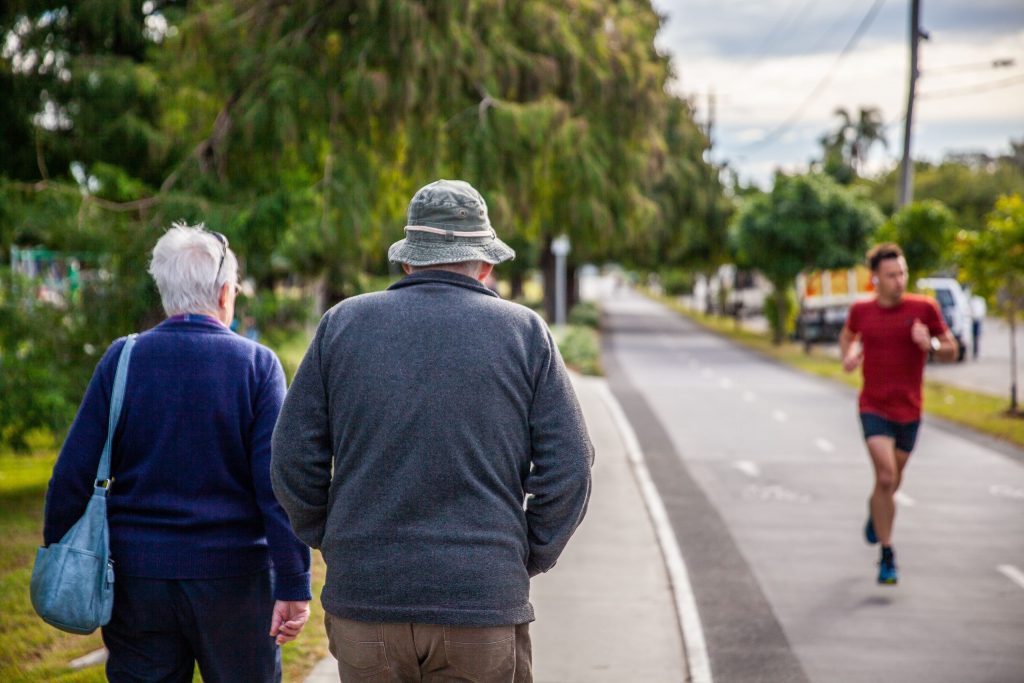
Kids walking to school
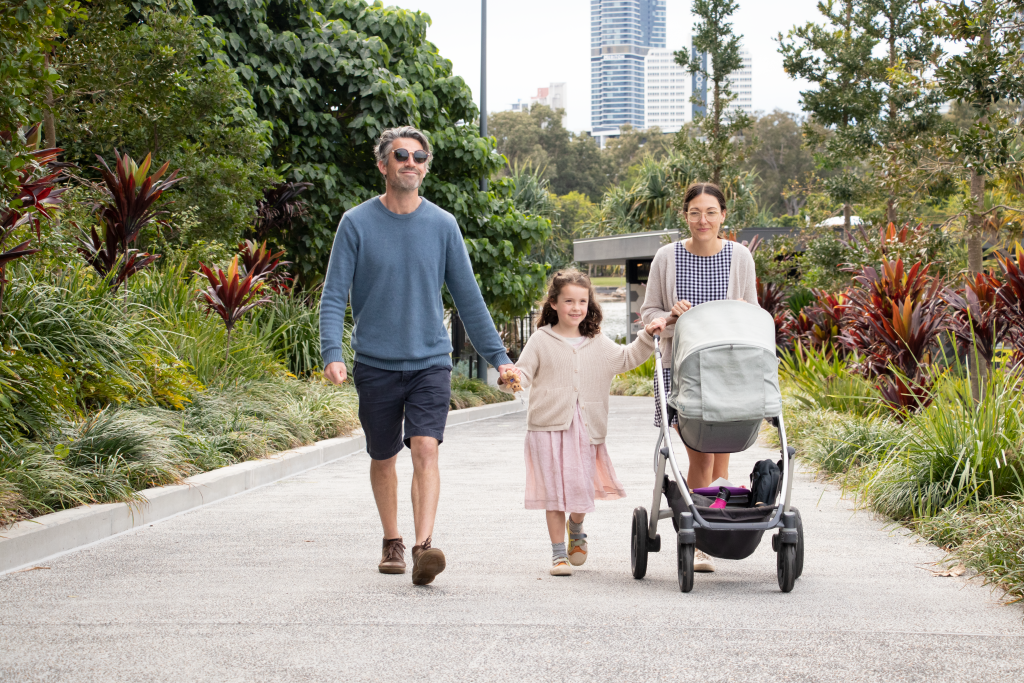
Tim and Elizabeth walking to the park in Brisbane

4: Pedestrian training and staff resources

  • We call on Local and State Government to ensure all relevant staff and professionals are up to date on the following training:
  1. Staff complete Disability Awareness Training such as QDeNgage training, Australian Network on Disability (AND) training or equivalent
  2. Staff are responsive and design transport projects in accordance with Australian Standards and the Disability Discrimination Act 1992 (DDA 1992)
  3. Staff attend Austroad pedestrian training or equivalent
  4. Staff undertake TMR’s Walking Infrastructure Masterclass and access Queensland resources such as Pedestrian Demand Forecasting Staff annually update road safety training, adhere to ‘safe systems’, and update related training specific to walking and active transport modes
  5. Staff annually update road safety training, adhere to ‘safe systems’, and update related training specific to walking and active transport modes

5: Walking strategies and plans

  • We call on Local Governments to develop and implement walking strategies and Walking Network Plans

  • We call on State Government to increase the funding for the Queensland Walking Strategy to continue the work of the Action Plan for Walking

  • We call on Local Governments to ensure that policies, plans, codes and tools prioritise people walking, rolling and strolling
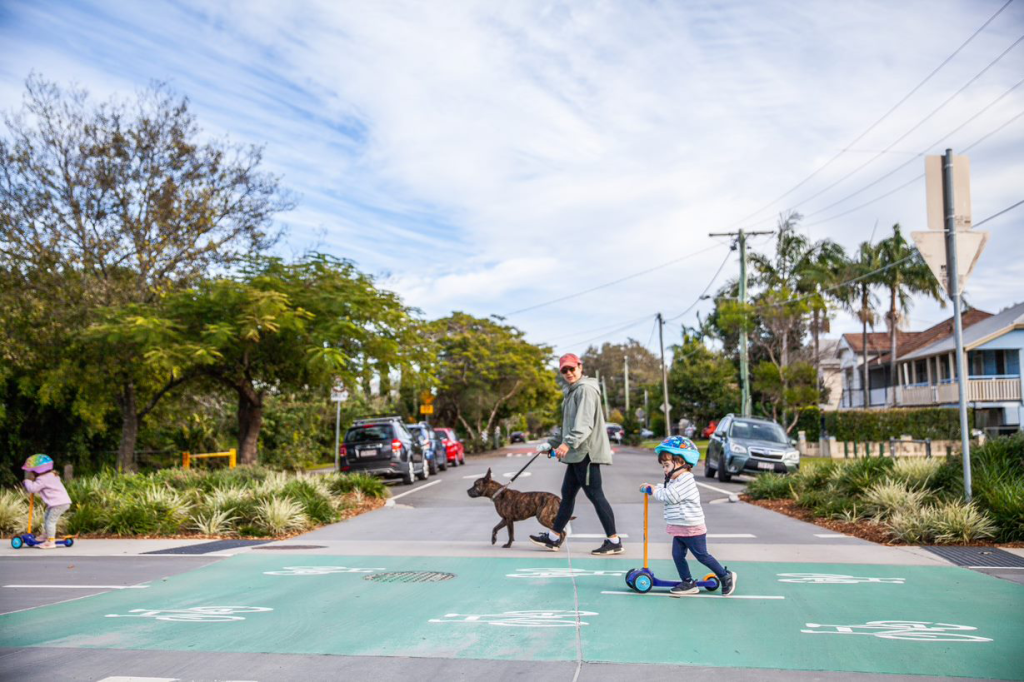
Man walking a dog, young child on scooter on marked raised level crossing.
Call to actionWho?Measure
1. Footpath network reviewsLocal Government State Government Individual audits (such as Queensland Walks 'Walk My Street Checklist', Heart Foundation Walking Checklist, or Healthy Streets index)Queensland Walking Alliance Benchmarking (in development and subject to funding), Walking in Queensland survey
2. Dedicated pedestrian infrastructure grantsState Government Federal GovernmentQueensland Walking Alliance Benchmarking
3. Increased investment in footpath networksAll three levels of GovernmentQueensland Walking Alliance Benchmarking
4a. Pedestrian training and staff resourcesAll three levels of Government, consultants and practitioners contracted by Government. With an emphasis on traffic and road design, transport planning, public transport network and infrastructure designQueensland Walking Alliance Benchmarking
4b.DDA Compliance, Whole Journey, Australian Standards complianceLocal and State Government, private developers, buildersComplaints, audits, referrals to Human Rights Commission Qld
5. Walking Strategies and PlansLocal Government with potential for co-investment via Federal or StateQueensland Walking Alliance Benchmarking

Thank you to our partners

The Queensland Walking Alliance is hosted by Queensland Walks and funded by the Queensland Government through the Action Plan for Walking.

The Queensland Walking Alliance members commit to a healthier and more connected Queensland by advocating to all levels of Government and practitioners by encouraging and supporting better walking facilities, better investment and more walking every day.


Download the document

You can download a copy of the Accessible and Inclusive Streets Call-to-Action here.

The Queensland Walking Alliance members commit to a healthier and more connected Queensland by advocating to all levels of government and practitioners by encouraging and supporting better walking facilities, better investment and more walking every day.

References

1. Department of Transport and Main Roads 2022, Licensing Statistics, 30 June, viewed January 2023, https://www.tmr.qld.gov.au/safety/transport-and-road-statistics/licensing-statistics.aspx

2. Infrastructure Australia 2017, The Whole Journey: A guide for thinking beyond compliance to create accessible public transport journeys, viewed January 2023, https://www.infrastructure.gov.au/infrastructure-transportvehicles/transport-accessibility/whole-journey-guide/whole-journey-guide-thinking-beyond-compliance-createaccessible-public-transport-journeys

3.Department of Transport and Main Roads 2019, Queensland Walking Strategy 2019-2029 ‘Walking: for everyone, every day’, p. 19.

4.ABS Data 2021, Snapshot of Queensland. High level summary data for Queensland in 2021, viewed January 2023, https://www.abs.gov.au/articles/snapshot-qld-2021

5. ABS Data 2021, Snapshot of Queensland. High level summary data for Queensland in 2021, viewed March 2023,  https://www.abs.gov.au/articles/snapshot-qld-2021

6. Queenslanders With Disability Network 2020, My Disability Matters, viewed January 2023, https://qdn.org.au/wpcontent/uploads/2021/07/MyDisabilityMatters_Policy-Platform_dated-15-Sept-20.pdf

7. Australian Institute of Health and Welfare 2022, People with a Disability in Australia, 5 July, viewed January 2023, https://www.aihw.gov.au/reports/disability/people-with-disability-in-australia-2022-in-brief/contents/about-people-with-disability-in-australia-in-brief

8. Department of Child Safety, Seniors and Disability Services, Who are older Queenslanders? Fact sheet https://www.families.qld.gov.au/_media/documents/seniors/population-fact-sheet.pdf

Related Articles

Extreme Heat Awareness Day

Heatwaves are Australia’s deadliest environmental disaster. Climate change is making summers longer and hotter, and heatwaves more dangerous. Our cities are sweltering as the urban

Read More »

2026 Funding update

An update from Greg Vann We wish to update our supporters and collaborators that the Department of Transport and Main Roads has recently advised that

Read More »
Local Redlands Bay advocate, Julie Brown demonstrating the considerations needed for people with visual impairments.

WeWalk online sessions

Are you interested in becoming a champion for walking and walkability? Are you passionate about making your neighbourhood more walkable? Want to learn more about

Read More »